A couple months ago a friend came over for a sewing afternoon (ps- I love having 2 sewing machines so I can invite friends over for sewing parties!). She was finishing up a quilt top and was about to add the last border when she decided she wasn’t in love with her border fabric. So we popped over to the fabric store, no big deal right? We walked around for a second and I watched as her eyes glazed over. She was used to picking out fabric from a collection to be sure everything would match perfectly. But the fabric from her quilt wasn’t available any more and so she had an entire store to pick from and no idea where to start.
Eventually she asked me to go around and pick out a few that might work and she’d choose from those. I personally couldn’t imagine anything more fun, so I happily scoured the through the bolts and we left with a border fabric much more beautiful than the last.
Picking out fabric for quilting requires you to look at color, value, style and size of print. Today I just want to talk about color. I love this design rule because it can be applied to anything from picking out quilting fabric to decorating a cake to picking out your outfit for the day.
Color is fun. It’s an element that can give a piece the perfect amount of pizzazz. But, as my friend can attest, creating your own color palette can be daunting. I’d like to suggest that if you learn three basic color terms, you’ll be picking out your own color combinations like a pro in no time. (and guess what, I bet you already know at least 2 of them)
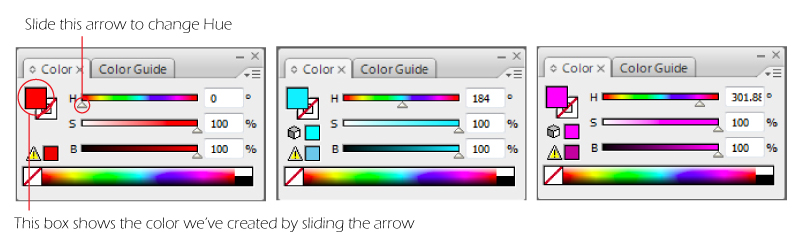
The first term is Hue. It’s an easy one. Hue is the term for what most people would refer to as ‘color’. Green is a hue, red is a hue etc. Of course, green can mean lime green or hunter green. When we talk hue, we’re just talking about the ‘green’ part in those descriptions. When I make a color in my design programs, there is a little window where I can slide an arrow back and forth and pick which hue I want.
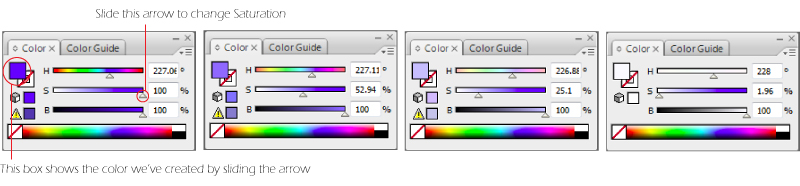
 Saturation comes next. It can also be referred to as chroma, but I’m going to stick with saturation because that’s actually a word people use outside of the design world, so hopefully you’ll remember it easier. It’s my favorite. Saturation is the difference between lime green and hunter green. When I slide my saturation arrow back and forth I can come up with a hundred different kinds of purple. The more saturated, the more intense the color (think neons). The less saturated, the more muted the color (think pastels)
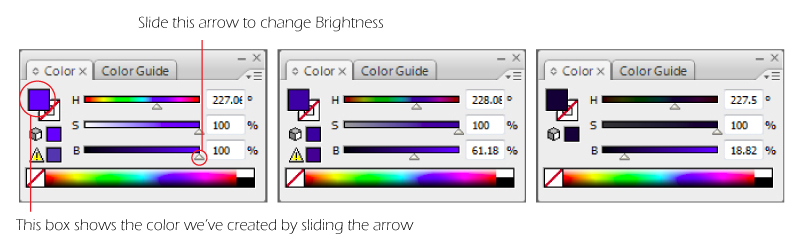
Last of all comes Brightness. Lucky you, this one is easy too. A color can be light (pastels) or dark (like navy blue). When I slide my arrow on this one, the color gets closer and closer to looking black as it gets darker.
So what does all this mean for your projects? I pulled out some of my fabric scraps for a real life example.
Let’s say I wanted to make a doll out of pink and yellow fabric. I go to my fabric stash and pick out all the pinks and all the yellows. They don’t all go together, so how do I decide which ones to use? The answer, my friends, is saturation.
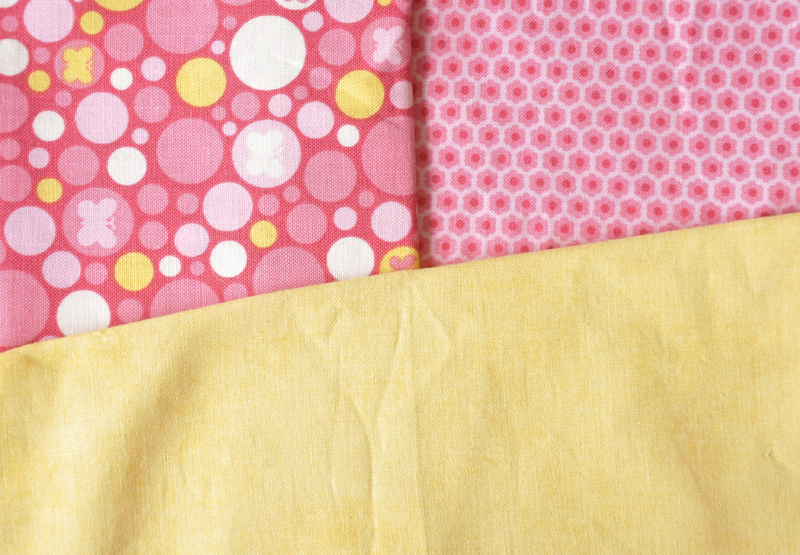 The fabrics above all work together. They are different colors, so hue isn’t what’s pulling them together. The yellow is light and the pink is dark, so brightness isn’t doing it. Their saturations, however, are all very similar. They are all bright and bold, so they work together.
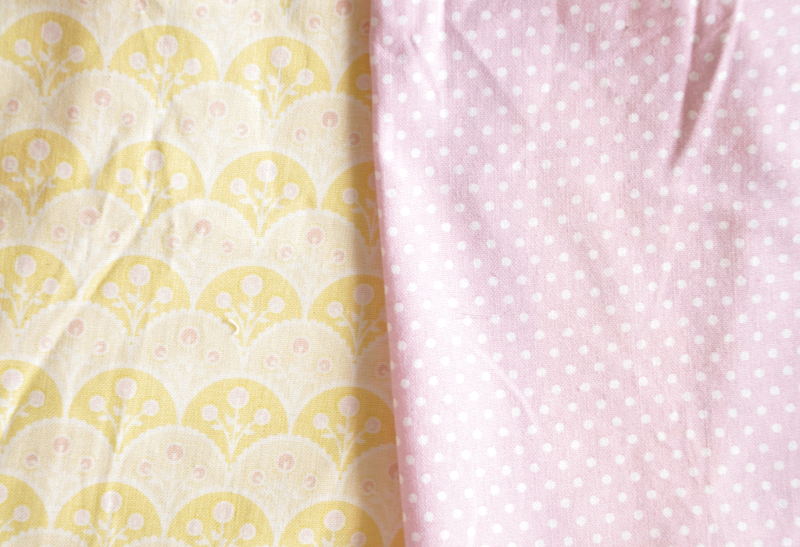 The pink and yellow fabric above are similar in both brightness and saturation, so they work together. The pair below is so low on the saturation scale that they almost look like different colors entirely, but they both did start out in the pink and yellow family. Together they work well. But was would happen if we tried to mix some of these fabrics of different saturations?
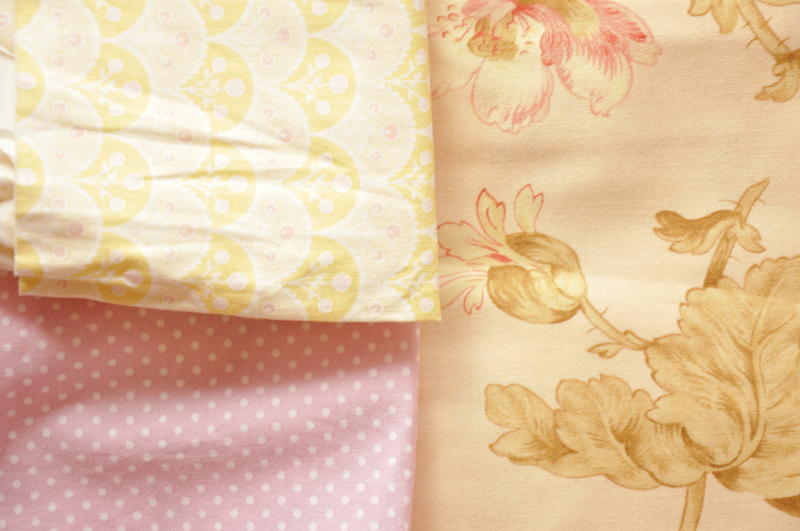
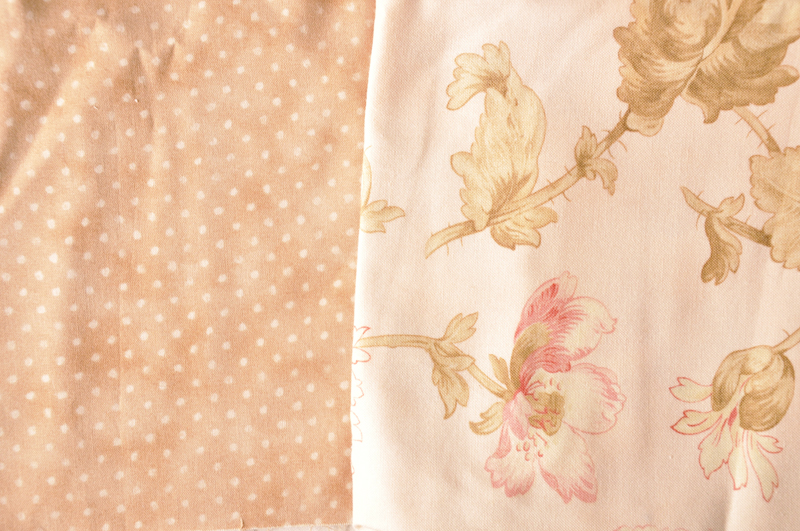
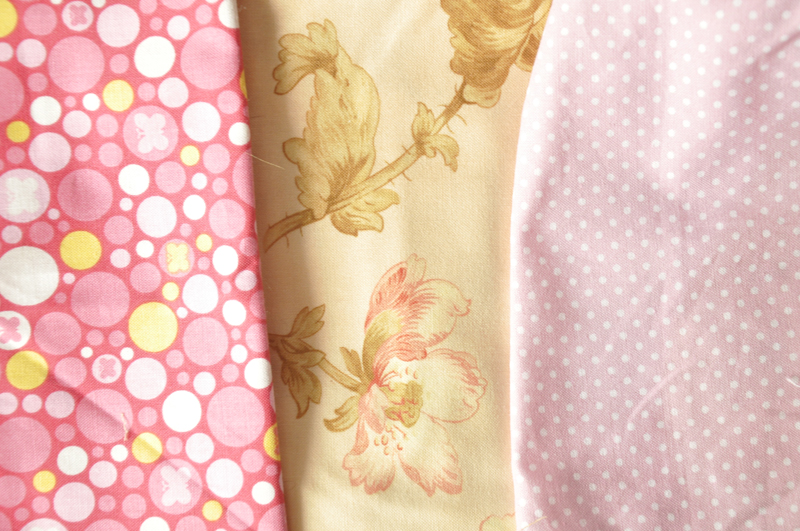
Yuck! These 3 pinks are clearly not meant to be used together. They all work better inside their own saturation family.
So next time you pick out some colors for a project, remember the importance of saturation. If you get stuck, try describing the color your are trying to match. If you describe it as a ‘dusty’ rose try to find a ‘dusty’ green. If you have a ‘pastel’ pink, look for a ‘pastel’ blue. I promise, putting a bit of an effort into matching color saturation will make a huge difference!
Ha! My eyes did totally glaze over. I’m just going to start picking my fabrics when I’m hanging out with you. (Which means I’ll just have to start hanging out more often. . . )